


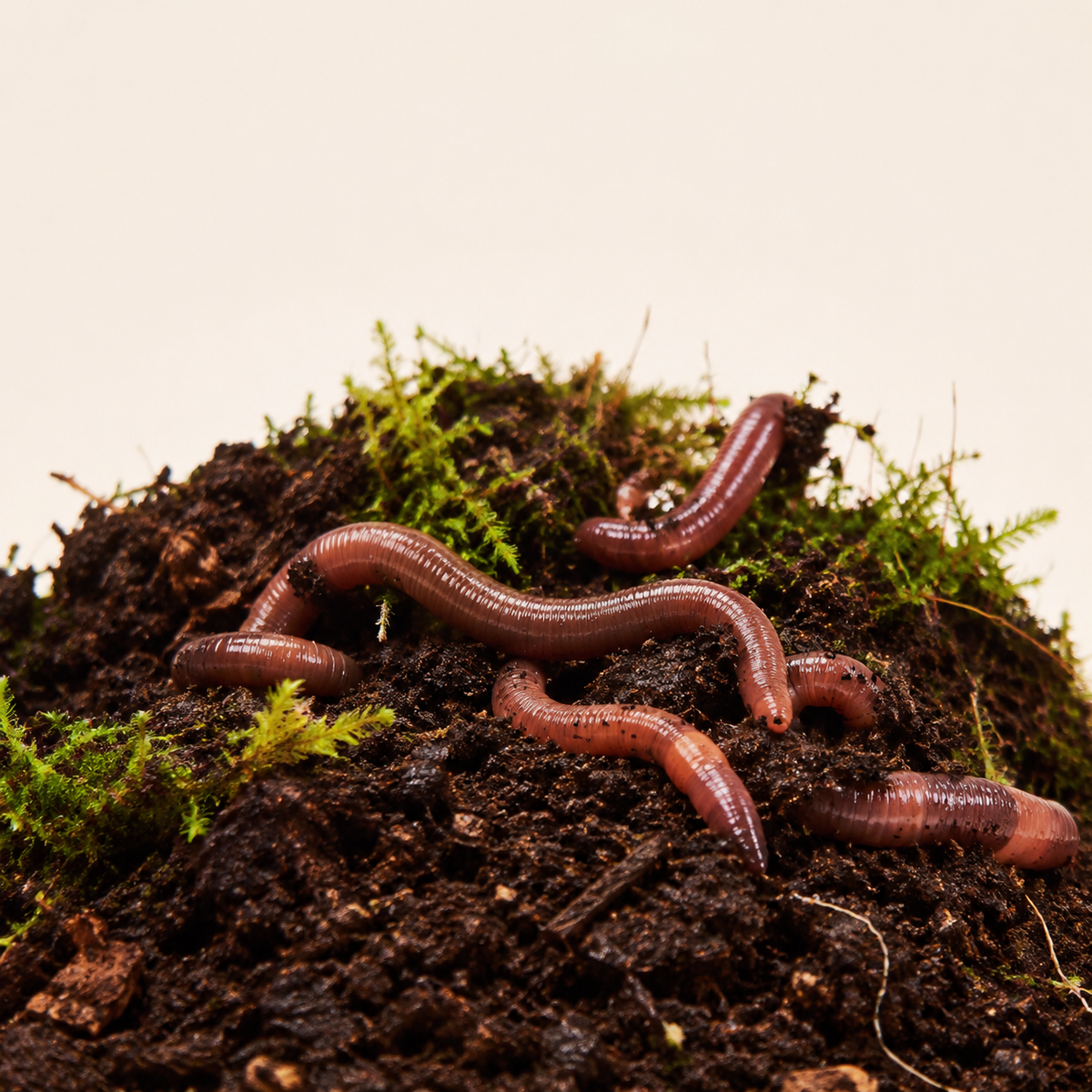
Livefood Earthworms
Natural, Soft-Bodied Livefood
Live earthworms provide a natural and appealing food for many suitable amphibians, reptiles, fish and other insect-eating or worm-eating animals. Their movement encourages natural hunting and feeding behaviour, while their soft bodies make them manageable prey for many species.
Earthworms are best offered as part of a varied, species-appropriate diet rather than as the only livefood provided.
Why Offer Earthworms?
- Soft-bodied livefood with no hard outer shell.
- Natural movement helps stimulate a feeding response.
- Particularly popular with many amphibians.
- Suitable for selected reptiles, fish and other exotic pets.
- Useful for adding variety to a balanced livefood rotation.
- Can be offered whole or cut into suitable portions where appropriate.
Suitable For
Earthworms may be suitable for many frogs, toads, newts, salamanders, axolotls, selected turtles, suitable lizards, predatory fish and other appropriately sized exotic pets.
Always confirm that earthworms are suitable for your particular species and life stage. Choose worms of a manageable size and never offer prey that is too large for the animal to swallow safely.
How to Use
- Offer an appropriate number according to your animal’s size, age and feeding plan.
- Choose a worm that can be swallowed safely and comfortably.
- For smaller animals, earthworms may be cut into suitably sized portions immediately before feeding where appropriate.
- Offer in a clean feeding dish, place where your pet can hunt naturally or present using suitable feeding tongs.
- Remove any uneaten worms or pieces promptly to help keep the enclosure clean.
- Use calcium or vitamin supplements only when required by your species-specific care plan.
Keeping Your Livefood
Keep earthworms in their original container or another secure, ventilated container with suitable moist bedding. Store them in a cool location away from direct sunlight, excessive heat and freezing conditions. The bedding should remain damp but not waterlogged.
Check the worms regularly and remove any that are dead or deteriorating. Wash your hands after handling livefood, its bedding or the container.
Livefood sizes and quantities may vary naturally between batches.