


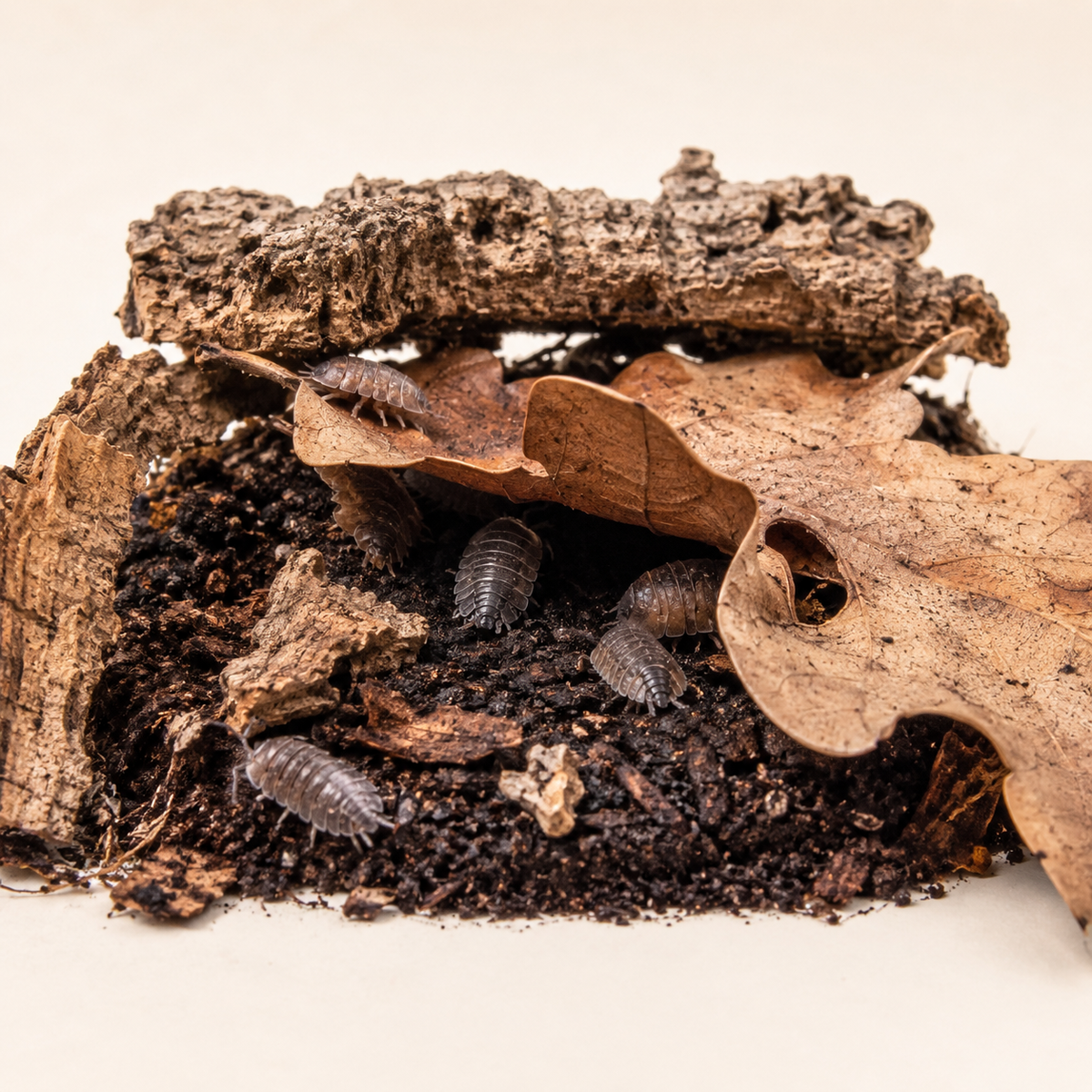
Isopods – Bioactive Clean-Up Crew
Small Workers for a Bioactive Enclosure
Isopods are small terrestrial crustaceans used as part of the clean-up crew in suitable bioactive reptile and amphibian enclosures. Once established within the substrate, they feed on decaying plant material, shed skin, leftover organic matter and other biodegradable waste.
Working alongside beneficial microorganisms and, where appropriate, springtails, isopods help recycle nutrients and support a more natural, living enclosure. Although some reptiles and amphibians may occasionally eat them, these isopods are primarily supplied as a bioactive clean-up crew rather than as conventional livefood.
Why Add Isopods?
- Help break down decaying leaves and other organic material.
- Contribute to the natural recycling of nutrients within the substrate.
- Support a healthier, more balanced bioactive environment.
- Provide natural movement and activity beneath the leaf litter.
- May provide occasional supplementary prey for suitable enclosure inhabitants.
- Can establish a self-sustaining colony when provided with suitable conditions.
Suitable Set-Ups
Isopods may be suitable for established or newly prepared bioactive enclosures housing reptiles, amphibians and selected invertebrates. They require an appropriate substrate, access to moisture, shelter and a continuing supply of suitable organic material.
Different isopod species can have different temperature, humidity and ventilation requirements. Always confirm that the variety supplied is compatible with your enclosure conditions and intended inhabitants before introduction.
Isopods support routine enclosure maintenance but do not remove the need for regular observation, spot cleaning and responsible animal care.
Introducing Your Clean-Up Crew
- Prepare the bioactive substrate before introducing the isopods.
- Provide plenty of leaf litter, pieces of cork bark or similar natural cover.
- Maintain a suitably moist refuge so the isopods can regulate their hydration.
- Gently place the isopods beneath leaf litter or shelter rather than leaving them exposed on the surface.
- Allow time for the colony to settle and begin reproducing.
- Avoid substrates or decorations treated with pesticides or other harmful chemicals.
Caring for Your Isopods
Maintain suitable moisture, ventilation and temperature for the isopod variety supplied. Provide decaying leaves and other appropriate organic matter, together with a suitable calcium source where required. Do not allow the entire enclosure to become waterlogged.
Before introduction, keep the container secure, ventilated and away from direct sunlight and temperature extremes. Introduce the isopods to their prepared enclosure as soon as reasonably practical after purchase.
Isopod sizes, numbers and appearance may vary naturally between batches.