


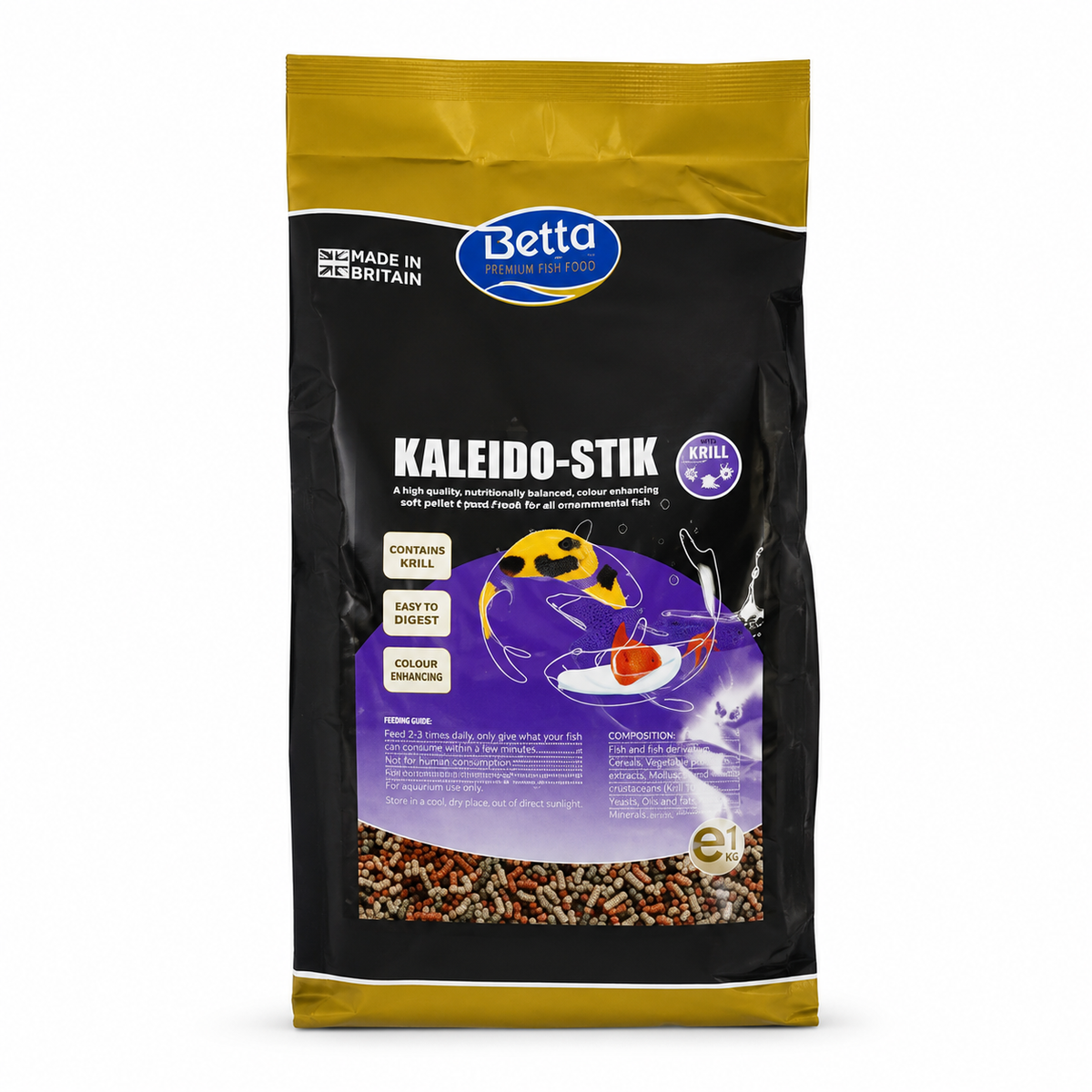
Betta Kaleido-Stix 1kg
Overview
Betta Kaleido-Stix is a floating pond stick food designed for a wide range of pond fish, including Koi Carp. It combines spirulina and vitamin C with a balanced recipe to support bright colour, steady growth and everyday vitality.
The 1kg pack is a practical size for regular pond feeding, while the same product line is also available in 2.5kg, 5kg and 10kg packs. That makes it easy to choose the pack size that suits your pond and feeding routine.
- Triple-blend style floating pond stick food
- Suitable for all types of fish, including Koi Carp
- Boosted with spirulina and vitamin C
- Designed to support colour, growth, vitality and general condition
Key Details
| Brand | Betta |
| Product Type | Pond fish food |
| Format | Floating pond sticks |
| Suitable For | All types of fish, including Koi Carp |
| Pack Size | 1kg |
| Other Pack Sizes | 2.5kg, 5kg and 10kg |
| Key Additions | Spirulina, vitamin C and FOS |
Composition, Additives & Analysis
Composition: cereals, including wheat, wheat feed, wheatgerm and bran rice; vegetable protein extract, including soya; meat and animal derivatives; oils and fats; minerals; FOS; spirulina (0.05%).
Additives: colourants.
| Vitamin A | 6000iu/kg |
| Vitamin C | 315mg/kg |
| Vitamin D | 3500iu/kg |
| Vitamin E | 230iu/kg |
| Iodine | 3mg/kg |
| Copper | 5mg/kg |
| Iron | 20mg/kg |
| Manganese | 50mg/kg |
| Zinc | 50mg/kg |
| Crude Protein | 24% |
| Crude Fat | 5% |
| Crude Fibre | 4.5% |
| Crude Ash | 6% |
Feeding Guide
- Feed 2 to 3 times daily when the water temperature is 10°C/50°F or above.
- Offer only as much as your fish can eat in a few minutes.
- Remove any uneaten floating food after feeding.
- Do not feed this food when water temperature falls below 10°C/50°F.
Feeding Notes
When temperatures drop below 10°C/50°F, switch to Betta Wheatgerm Sticks instead of continuing with this food.
For longer periods away from the pond, Betta Pond Holiday Food Block is a useful holiday-feeding option. For extra variety, Supa Shrimp Cocktail can be offered as a treat.
This food is best fed in line with water temperature, so pond conditions should always guide how much and how often you feed.